
March 17th, 2026
I have now obtained confirmation that the extremely strange chunk of sandstone describe in the previous page is in fact native — it has been here for a very long time. That confirmation comes from finding a number of other pieces of the same kind of sandstone:
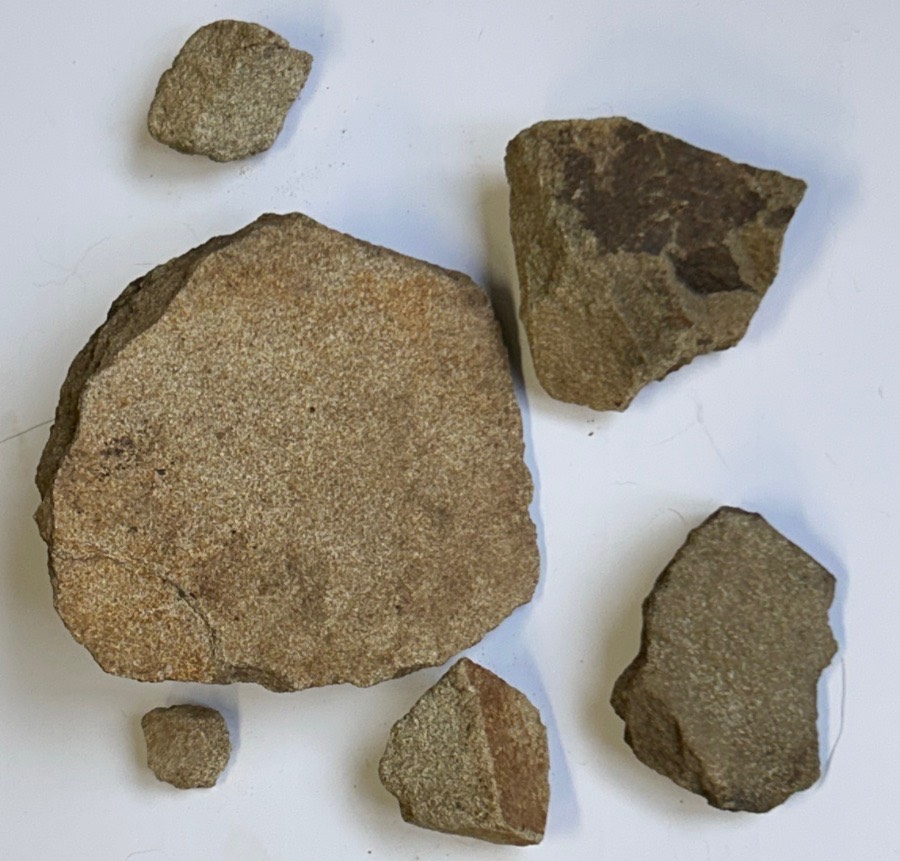
Here’s a closeup of the two pieces, demonstrating that they are the same material. The small piece does look redder than the large piece, but that is due to the weaker lighting, as shown by the metric ruler in both photos. Damn, I really wish I had a proper dissecting microscope!
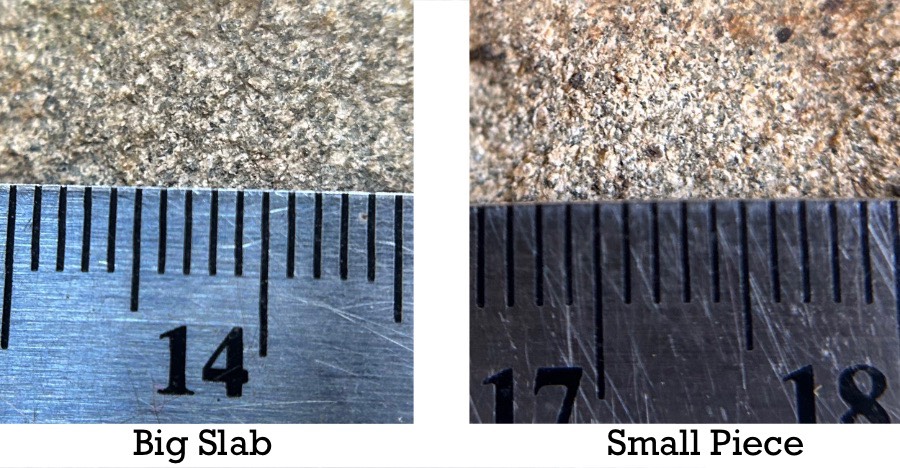
This sandstone appears to be granitic in nature, but I really don’t know enough about sandstone to be confident of my assessment.
There remains a major problem explaining the presence of this sandstone on my land. The dominant rock type is, as I have previously written, metamorphosed igneous rock. It appeared about 250 million years ago, was subducted, underwent metamorphosis for millions of years, and was eventually exposed. “Dominant” understates the presence of this metamorphosed rock — it is everywhere on my forty acres. There are two other types of rock that appear in one small hillside, scattered in the soil. There is the sandstone I have described, and there is also some brittle mudstone, which I suspect to be pond mud some millennia old.
The sandstone slab is 5 cm thick; I believe that this means that it must have formed along a coastline and underwent some millions of years of compaction. But how could a section of sandstone a few million years old have ended up on top of much older metamorphosed rock that had been deeply subducted? I sketched out a dozen schemes in which beach sand gets dragged down along with the Juan de Fuca plate, but in none of my arrangements could I produce anything in which lightly cooked sandstone could end up on top of heavily cooked basalt. There’s just no way I can see to get an unconformity between the sandstone and the metamorphosed basalt.