
November 4th, 2025
I’ve been famous — twice. The first time was when I was at Atari. I created a number of good games and delivered a bunch of seminars teaching programmers how to take advantage of the powerful graphics capabilities of the Atari computers. This got me onto the cover of “Popular Computing” magazine, a big deal back then. This was 44 years ago.
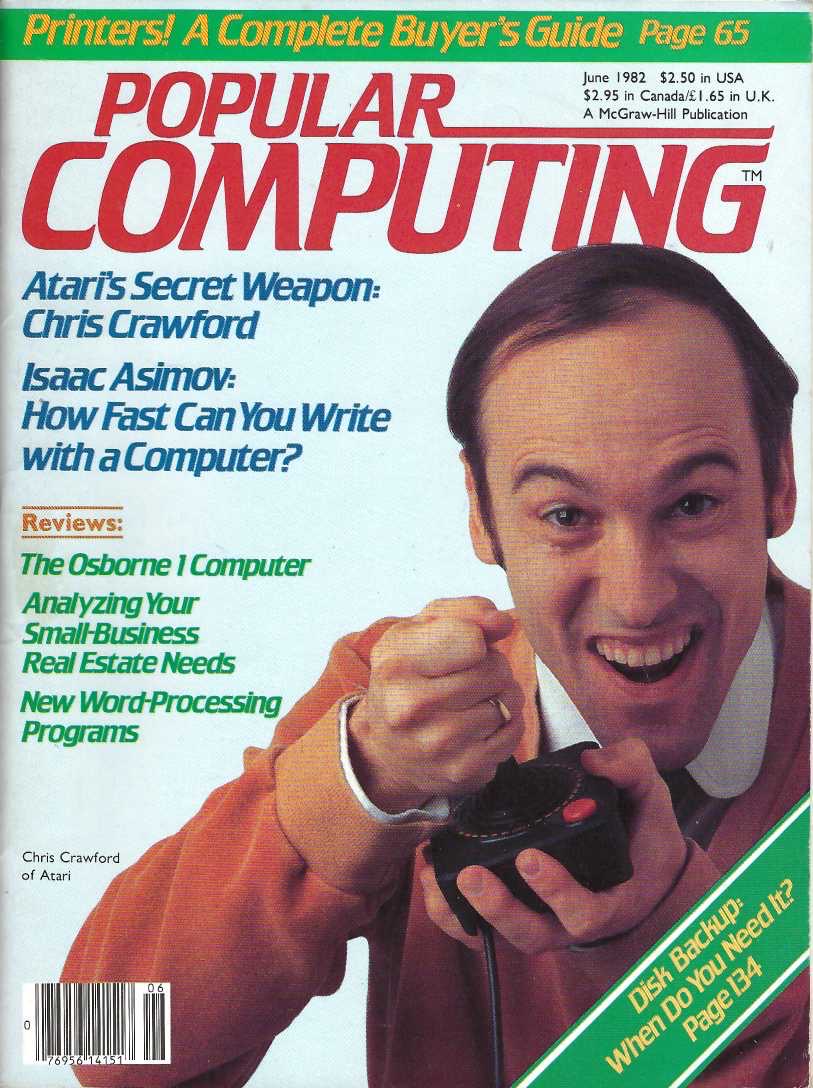
As you can see, I looked considerably better back then.
I was famous! It really went to my head. I figured that I must be pretty important to be so famous. But then Atari collapsed, and I went from being “Mr. Atari” to “Mr. Nobody”. It really was amazing how precipitious the fall was. I should have learned a lesson from that. I was too young to learn.
But then I designed Balance of Power, a game about geopolitics during the near-nuclear confrontation between the USA and the USSR. It was quite a hit. Here I am in the pages of the New York Times Sunday Magazine:
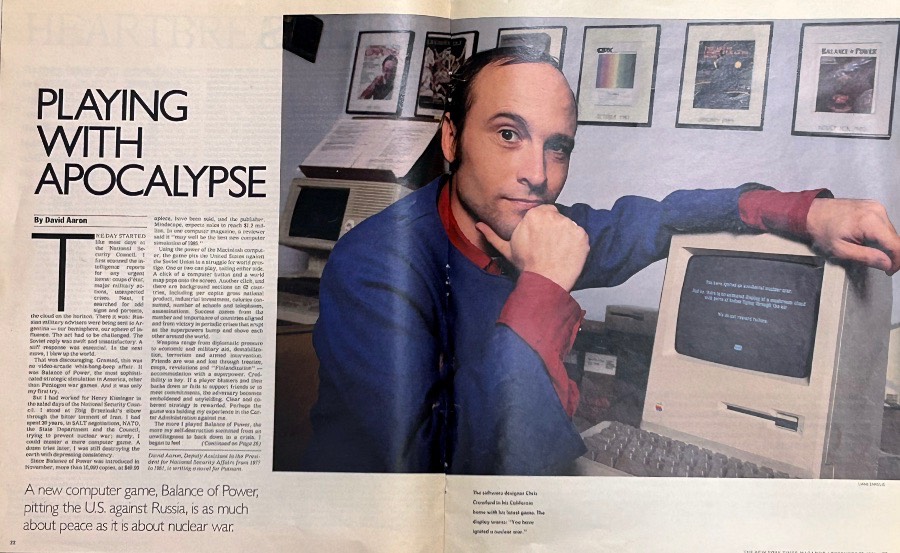
I went on to found the Game Developers’ Conference, create the Journal of Computer Game Design, and a number of other worthy efforts. I was famous again! I was recognized in airports; I was invited to deliver lectures all over the world. Once again my ego inflated to ginormous size.
That second round of fame slowly ebbed; invitations to speak at conferences continued until, oh, maybe five years ago.
After all these years of fame, I have learned something important: all that fame meant absolutely nothing. Yeah, sure, it generated lots of opportunities. People respected my opinion because I was, after all, CHRIS CRAWFORD. Lots of people thought that I was really smart.
But I eventually came to realize that the shiny image of me that people saw was a fake. They didn’t know anything about me. They heard that CHRIS CRAWFORD is really smart, and that’s about all they knew. But when you have lots of people all pointing at you with admiration, respect, awe, or some other favorable emotion, you start to believe that whomever is in the center of that circle (you) must be pretty awesome.

“Gee, I must be really great!”
The danger is that you might actually believe this nonsense. After all, it is immensely flattering and it feels really great. But it’s a chimera — there’s no actual substance to fame. All those people who think you’re the greatest — they really don’t know anything about you. It’s rather like the Kardashian sisters. They’re immensely famous. Why are they famous? Well… because they’re famous. What did they do to get so famous? Well… they got famous. Or how about the fame that Mr. Trump reaped by being on a television show? Gosh, if he’s so famous, he must be smart, right?
Yeah, sure. The world is full of famous people who are famous because they spent all their efforts chasing fame. There are also plenty of famous people who earned their fame. But, as a rule, you don’t get famous without chasing after fame. I never actively sought fame, but I did do a lot of projects that attracted a lot of attention.
If you’re young and talented, it makes sense to try to wriggle your way into the spotlight; it can help advance your career. I wouldn’t blame you for chasing after fame in your youth. But I warn you: don’t take it seriously. Fame is no certification of worthiness. Plenty of grossly unworthy people are famous. Work hard, exercise your talents to the fullest, and some fame will come your way. Accept it graciously and keep working. Never allow the pursuit of fame to distract you from what is important: what you actually DO with your life.